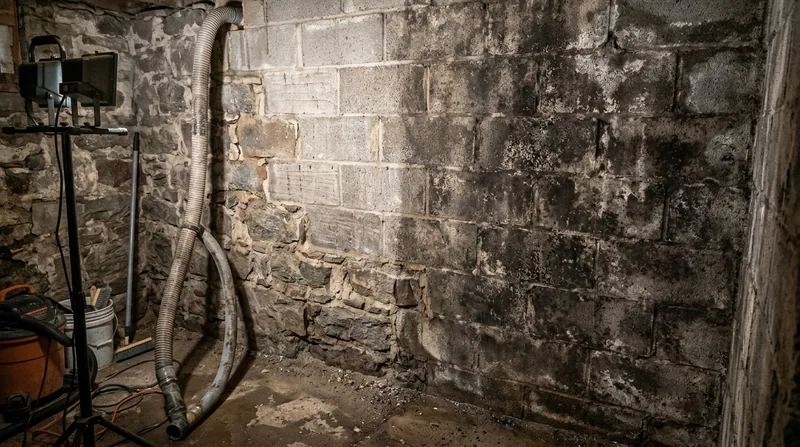




Basement Mold Remediation in Framingham: Fix the Moisture, Not Just the Mold
If you smell that damp, earthy odor every time you walk down the stairs, you are dealing with a moisture problem before you are dealing with a mold problem. Basement mold remediation in Framingham starts with finding where the water is getting in, not with a spray bottle of bleach. Framingham sits on glacial till and sandy outwash over ledge, and the low lots near Cochituate Brook and the Sudbury River carry a high water table that pushes moisture through fieldstone, brick, and early block foundations all year. The 1900s houses in Saxonville and downtown were built with cellars that were never meant to be dry rooms, and the 1940s to 1960s Capes in Nobscot still have original bulkhead doors that let in wind-driven rain. We treat the mold, dry the structure, and correct the drainage so it does not come back. Call Framingham Waterproofing at (774) 217-6942 to schedule a free basement inspection.
Why Mold Keeps Coming Back in Framingham Basements
Mold needs three things: food (paper, wood, drywall, dust), warmth, and moisture. You cannot remove the first two from a finished basement, so the only lever that matters is moisture. In Framingham, that moisture rarely arrives as a visible puddle. It arrives as efflorescence on the stone, as damp block walls behind insulation, as a musty smell in the stairwell, and as condensation on cold water pipes in July. The dominant failure mode here is hydrostatic pressure pushing groundwater through mortar joints and cold cracks during spring melt and nor'easter rain, not a single pipe leak. When the water table rises, water finds the path of least resistance through the footing joint and the porous fieldstone. Here is what we typically find in Framingham basements:
- Fieldstone and brick foundations in Saxonville and downtown wick water through the stone itself, not just the joints.
- Poured basements in 1950s to 1970s split-levels in Nobscot develop cold cracks that seep after every heavy rain.
- Older bulkhead doors and window wells in the village streets collect rain and funnel it against the foundation.
- Missing or crushed weeping tile at the footing lets water sit against the wall instead of draining to the sump.
- Finished basements trap moisture behind drywall, which is where the musty smell and the visible mold growth start.
Each of those paths is fixable, but the fix has to match the source. Sealing the inside of a wall that is taking water from the outside is a temporary patch at best.
Key info: A homeowner on a low lot off Cochituate Road called us about a musty finished basement that had been "cleaned" twice before. The mold kept returning because the footing drain was clogged with glacial clay soil and the sump pump ran dry. We corrected the drainage first, then remediated the affected drywall and framing. No amount of surface treatment would have held without that step.
Mold is a moisture and building-materials issue, and the honest guidance is simple: if the wall stays wet, the mold returns. The Massachusetts Board of Building Regulations and Standards sets the statewide code that local inspectors apply, and Framingham's building department verifies the work that touches structure or drainage.
How We Remediate Mold and Stop the Moisture at the Source
We do not treat mold as a cleaning job. We treat it as a moisture-control job with a cleanup attached. The first hour on site is diagnostic: we map where the water is entering, check the sump basin and discharge line, look at grading and downspout extensions, and read the wall for efflorescence and cold cracks. Then we build a plan that addresses both the growth and its cause. Here is how the work runs on a typical Framingham basement:
- We contain the work area with plastic sheeting and negative air pressure so spores do not spread to the rest of the house.
- We remove and bag porous materials that cannot be saved, such as saturated drywall, insulation, and cardboard.
- We HEPA-vacuum and treat affected framing, block, and stone with an approved antimicrobial, then dry the structure with commercial dehumidifiers and air movers.
- We verify moisture readings before closing anything up, because trapped moisture is how the problem restarts.
- We correct the water path with the right method: crack injection, interior perimeter drain, sump pump replacement, grading, or downspout extension.
- We install a vapor barrier or dimple board where the wall needs a drainage plane, and we recheck the sump and check valve.
The moisture fix is what separates a real remediation from a repeat call. If the source is hydrostatic pressure, an interior drain tile system is usually the better answer than exterior excavation, especially on the older fieldstone cellars where digging outside risks the wall.
Key info: A 1920s brick foundation on a village street near Saxonville had mold on the lower two feet of a finished wall. The crack was a hairline cold joint, but the real driver was a downspout that dumped roof water two feet from the corner. We extended the discharge, injected the joint with polyurethane, and remediated the wall. Total moisture fix was modest; the mold cleanup was the larger line item.
Remediation and Moisture-Control Methods We Use in Framingham
Not every basement needs the same approach. A single cold crack on a poured wall in a 1960s ranch is a different job from a fieldstone cellar that weeps along its whole length. The table below shows the methods we pair with remediation and when each one earns its cost.
| Approach | Description | Best for |
|---|---|---|
| Containment and surface treatment | Sealed work zone, HEPA vacuuming, antimicrobial treatment of framing and masonry, commercial drying. | Visible mold on joists, block, or framing where the water source is already controlled. |
| Epoxy or polyurethane injection | Ports drilled along a cold crack, resin injected to fill the full depth of the wall. | Poured walls with active seepage after rain; polyurethane for wet, moving cracks, epoxy for tight structural ones. |
| Interior perimeter drain and sump | Drain tile at the footing inside, routed to a sump basin with a pump and check valve. | Fieldstone and brick cellars with hydrostatic pressure and a high water table. |
| Vapor barrier and dimple board | Wall drainage plane and vapor control that keeps damp masonry from feeding the room. | Basements being refinished after remediation, or walls that stay damp but do not flow. |
| Grading and downspout correction | Regrade soil to slope away, extend discharge lines, repair window wells. | Localized dampness near corners and bulkheads, common on the older village streets. |
We tell you plainly when simple crack sealing is enough and when the real problem is pressure that no sealant will hold back. That honesty is the whole point of a diagnostic-first approach.
Basement Mold Remediation Cost in Framingham: What to Expect
Most homeowners want a number before they want a lecture, so here it is: remediation work in Framingham generally starts from $1,500, and that figure covers a contained, modest area with the moisture source identified. The number moves with the size of the affected area, whether finished materials have to come out, how many rooms are involved, and whether the moisture fix is a simple downspout extension or a full interior drain tile and sump installation. A single wall in a 1960s Nobscot colonial is a smaller job than a finished basement in a 1990s Hopkinton subdivision where drywall and insulation have to be removed and replaced. We separate the remediation line from the waterproofing line on the estimate so you can see what each part costs. Get two or three written estimates, compare scope line by line, and ask whether the price includes the moisture fix or stops at the cleanup. Our full pricing overview breaks down the ranges by method.
Choosing a Basement Mold Remediation Contractor Near Framingham
You are hiring for two skills at once: safe remediation and correct water control. Plenty of companies do one and not the other. Ask for the license and insurance certificate before work starts, and confirm the policy covers mold remediation, not just general construction. Ask how they verify dryness before closing walls, and ask whether they will put the moisture fix in writing. Check references from Framingham or a neighboring town with similar housing stock, because a contractor who only works on new construction may not understand a fieldstone cellar. Any work that alters drainage or the sanitary connection of a sump discharge may need a permit, and the local building department has the final say, so confirm the scope with them. If your home is in a historic district or an HOA, check those rules before exterior work begins. Reach out through our contact page to set up a free inspection and a written scope.
Basement Mold Remediation in Framingham: Pricing Guide
| Service | Price | Details |
|---|---|---|
| Containment and surface remediation | Starting at $1,500 | Covers a contained area with HEPA vacuuming, antimicrobial treatment, and commercial drying; area size moves the price. |
| Remediation plus crack injection | Starting at $2,200 | Adds epoxy or polyurethane injection on a poured wall crack; number of injection ports drives the total. |
| Remediation plus interior drain and sump | On estimate | Needed when hydrostatic pressure is the source; linear footage of drain tile and pump choice set the number. |
| Finished basement tear-out and rebuild | On estimate | Drywall and insulation removal plus reconstruction; room count and finish level require an on-site look. |
| Travel | Included | In Framingham and surrounding areas, no separate call-out or mileage fee. |
| Estimate | Free | Response within 24h at (774) 217-6942, no obligation to book. |
Indicative pricing, the exact cost depends on square footage, finish, and site access. Free personalized estimate within 24h at (774) 217-6942.


